
Don't Get Sued: The Truth About Home Selling Disclosures

Most sellers are terrified of pricing their home wrong.
And they should be.
But there is something even more dangerous than overpricing your house.
Getting sued after the sale.
The scary part is that most disclosure lawsuits do not happen because sellers are malicious. They happen because ordinary homeowners convince themselves that a problem was fixed, forgotten, too small to matter, or simply not worth mentioning.
A roof leak becomes a "former leak."
A foundation crack becomes "probably cosmetic."
An unpermitted bathroom becomes "close enough."
Then six months after closing, a lawyer gets involved.
The buyer discovers paperwork, repair records, old insurance claims, contractor invoices, HOA complaints, or evidence left behind in the attic, basement, or county records.
Suddenly, what felt like a harmless omission turns into a legal problem.
And according to real estate attorneys, disclosure disputes remain one of the most common reasons sellers get sued after closing.
The good news?
Most of these lawsuits are completely preventable.
Today we're walking through the 10 disclosure mistakes that create the most legal trouble for home sellers, starting with the smaller issues and ending with the one disclosure problem that generates more lawsuits than all the others combined.
10. Assuming "I Didn't Know" Is a Legal Defense
This is where many sellers get into trouble before they even realize it.
Most state disclosure forms use some version of the phrase:
"Known to the seller."
Unfortunately, many homeowners interpret that phrase incorrectly.
They assume that if they never officially diagnosed a problem, they can claim ignorance later.
Courts rarely see it that way.
If a reasonable homeowner should have known about a defect, the law often treats them as though they did know.
Imagine water entering your basement every spring.
Maybe you never hired a waterproofing company.
Maybe you never paid for an inspection.
Maybe you simply moved boxes away from the wet corner and carried on with life.
That does not mean the problem magically disappears.
If a buyer's attorney can demonstrate that a reasonable homeowner would have recognized the issue, your "I didn't know" defense starts falling apart quickly.
The same applies to roof leaks.
If you've placed buckets under drips, patched ceilings repeatedly, or moved furniture to avoid water stains, it becomes very difficult to argue that the issue was unknown.
The lesson is simple:
If you've observed the problem, lived with the problem, worked around the problem, or attempted to fix the problem, there is a very good chance it qualifies as a known condition.
And known conditions belong on disclosure forms.
9. Forgetting About Past Flooding Incidents
One of the most common disclosure mistakes involves water.
Not current water.
Past water.
Let's say your basement flooded during a severe storm several years ago.
The event was frustrating, expensive, and stressful.
You installed a sump pump.
Improved grading.
Added drainage.
Maybe you never had another issue.
Problem solved, right?
Not exactly.
From a disclosure standpoint, buyers are often entitled to know that flooding occurred.
The fact that you corrected the issue is helpful.
The fact that it happened is still relevant.
Many sellers accidentally omit this information because they mentally categorize the event as ancient history.
But buyers are not just purchasing the home's current condition.
They're purchasing its history.
And flooding history matters.
A buyer who discovers an old insurance claim, contractor invoice, or waterproofing receipt after closing may immediately wonder what else was left out.
Fortunately, this situation is easy to handle correctly.
Disclose the flooding.
Explain what happened.
Provide receipts.
Provide warranty information.
Document the improvements.
A properly disclosed and documented repair often creates confidence.
An undisclosed repair creates suspicion.
And suspicion is expensive.
8. Failing to Disclose Repaired Foundation Issues

Foundation repairs create a unique challenge.
Because many sellers genuinely believe the issue no longer matters.
After all, the repair was completed years ago.
The house has been stable.
Everything appears fine.
Why bring up old problems?
Because foundation repairs leave evidence.
Inspectors know exactly what to look for.
They find:
Steel piers
Helical anchors
Epoxy injections
Reinforced walls
Patched cracks
Drainage systems
These repairs are often visible within minutes.
When buyers discover evidence of a foundation repair that wasn't disclosed, they immediately begin asking questions.
Not just about the foundation.
About you.
Now the issue becomes trust.
The buyer starts wondering:
What else wasn't disclosed?
Why was this hidden?
Was the repair actually successful?
Are there other structural issues?
Ironically, the foundation repair itself may not scare them.
The omission often does.
The best approach is straightforward.
Provide:
Repair invoices
Contractor information
Engineering reports
Transferable warranties
Dates of work completed
What could have looked like a major red flag suddenly becomes evidence of responsible homeownership.
7. Hiding Neighbor Disputes
Many homeowners are shocked to learn this can be a disclosure issue.
Yet neighbor conflicts regularly create lawsuits.
Property line disputes.
Fence disagreements.
Noise complaints.
Tree encroachments.
Pet issues.
Shared driveway arguments.
Ongoing conflicts with neighboring properties can affect a buyer's enjoyment of the home.
And that makes them important.
The legal standard in many states focuses on material facts that impact a buyer's use and enjoyment of the property.
An active feud certainly qualifies.
The mistake sellers make is assuming the dispute will disappear after they leave.
Sometimes it does.
Often it doesn't.
The buyer eventually meets the neighbor.
And neighbors rarely keep quiet.
If the first thing your buyer hears after moving in is a detailed explanation of the ongoing dispute you failed to disclose, your legal position becomes much weaker.
A better approach is simple.
State the facts.
Remain neutral.
Document the current status.
Avoid emotional language.
Let the buyer decide whether the issue matters.
Transparency may feel uncomfortable.
But it is far less uncomfortable than explaining omissions in court later.
6. Failing to Disclose HOA Violations, Complaints, or Assessments

If your property sits inside a homeowners association, there is an entire category of disclosures that many sellers accidentally overlook.
And unfortunately, these can become very expensive surprises for buyers.
Maybe there is an unpaid violation notice sitting in a drawer somewhere.
Maybe the HOA has been discussing a future special assessment.
Maybe there is a pending complaint regarding landscaping, paint colors, fencing, parking, or architectural compliance.
Many homeowners dismiss these issues because HOA paperwork tends to blend into the background noise of daily life.
But buyers do not see it that way.
The day they become owners, those problems become theirs.
An unpaid fine becomes their unpaid fine.
A pending special assessment becomes their unexpected bill.
A violation notice becomes their headache.
That is exactly why disclosure matters.
Before listing your home, contact the HOA and request documentation showing your account status.
Ask specifically about:
Outstanding violations
Open complaints
Pending assessments
Future capital improvement projects
Delinquent balances
Having these answers before your home hits the market prevents unpleasant surprises later.
More importantly, it protects you from claims that you knowingly passed a financial obligation to the next owner.
MID-ARTICLE CONTENT UPGRADE CTA
Want My FSBO Negotiation Scripts That Earn an Extra 10%?
Get the FSBO Negotiation Power Pack — the exact scripts sellers use when agents or buyers try to crack their confidence.
Learn what to say, when to stay silent, and how to control the deal.
Download here: https://foolprooffsbo.com/checklist
5. Not Mentioning Past Pest Problems
Termites.
Rodents.
Carpenter ants.
Bed bugs.
Roaches.
Most homeowners would rather forget these issues ever happened.
The problem is that disclosure forms often ask about them directly.
And many state disclosure forms specifically reference past infestations, not just current ones.
This is where sellers get themselves into trouble.
The infestation happened years ago.
The treatment worked.
The problem disappeared.
So they check "No."
Unfortunately, that answer may be inaccurate.
The question is often asking whether the property has a history of the issue.
Not whether the issue exists today.
A buyer who later discovers:
Old termite damage
Abandoned bait stations
Treatment records
Pest control stickers
Contractor repair invoices
may immediately begin questioning your disclosure accuracy.
Again, documentation solves most of the problem.
Provide:
Treatment dates
Pest company information
Inspection reports
Warranty details
A documented solution is reassuring.
An undisclosed history creates doubt.
And once doubt enters the transaction, everything becomes more complicated.
4. Forgetting Federal Lead Paint Requirements
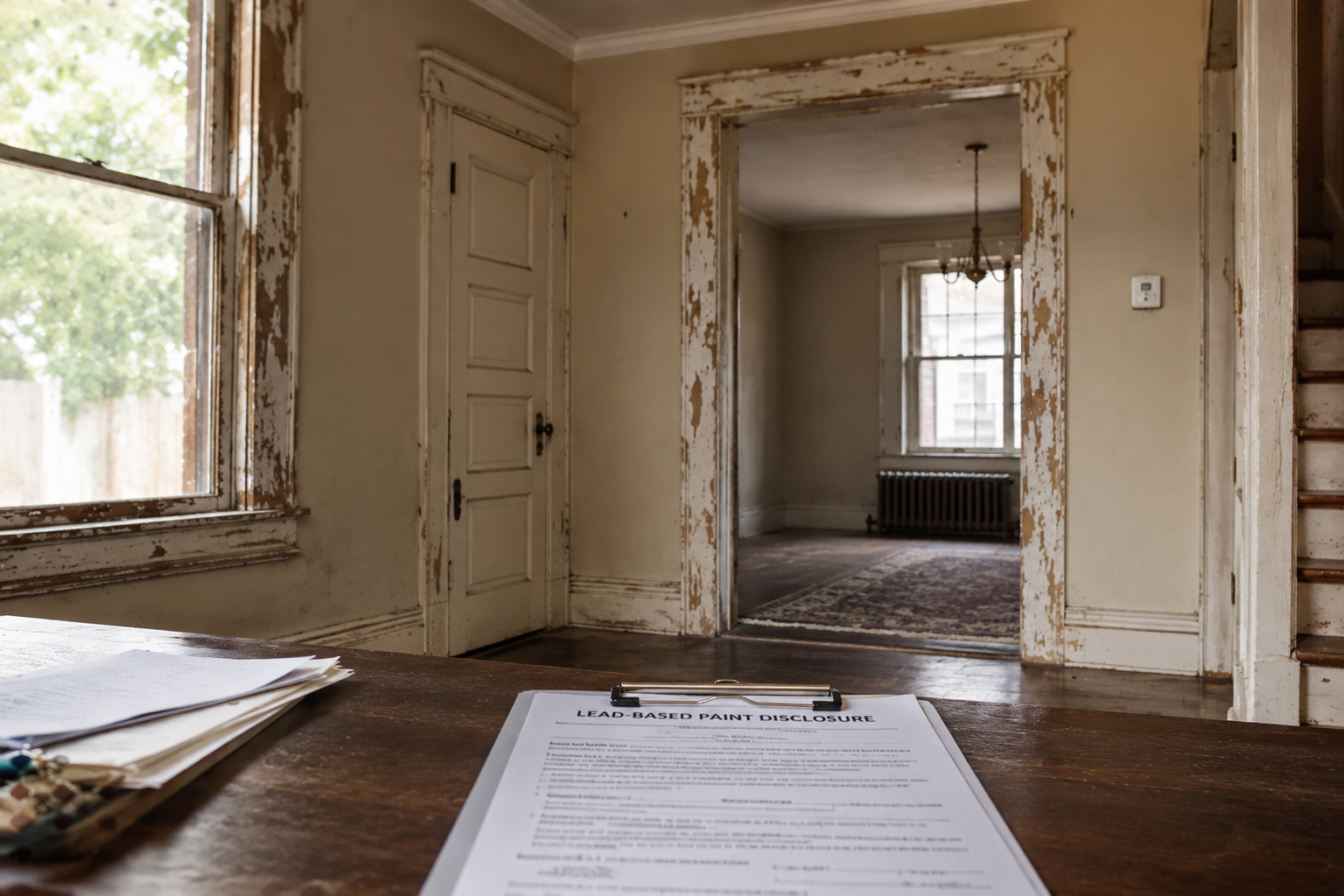
This is one area where ignorance can become extremely expensive.
If your home was built before 1978, federal lead paint rules apply.
And these requirements are not optional.
Many sellers assume this is a simple disclosure checkbox.
It is not.
There are multiple required elements:
Lead paint disclosure form
EPA pamphlet delivery
Specific contract language
Inspection opportunity
Buyer acknowledgment
Missing any one of them can create problems.
The reason this catches sellers off guard is because they complete most of the process correctly and assume they are protected.
But federal enforcement does not necessarily view partial compliance as compliance.
The requirements work together.
Leaving out one piece can still create liability.
Fortunately, title companies and closing attorneys typically manage much of this paperwork.
Still, the penalties associated with lead disclosure violations are large enough that every seller should personally verify the process was completed correctly.
This is not a section of the transaction where shortcuts make sense.
3. Not Disclosing Deaths When Required
This disclosure category creates endless confusion.
That is because the rules vary dramatically by state.
Some states require disclosure under specific circumstances.
Others only require disclosure if directly asked.
Many states have no disclosure requirement at all.
The mistake sellers make is assuming that because disclosure may not be required, dishonesty is acceptable.
It is not.
If a buyer asks a direct question, honesty remains the safest answer.
Fraud claims often arise not because information was omitted, but because information was intentionally misrepresented.
And buyers today have access to more information than ever before.
Online records.
News archives.
Neighborhood forums.
Public databases.
The information often surfaces eventually.
The simplest rule is this:
Know your state's requirements.
Follow them carefully.
And if a buyer asks a direct question, answer truthfully.
A truthful answer may cost you a buyer.
A dishonest answer can cost you a lawsuit.
2. Hiding Unpermitted Work
This one catches homeowners constantly.
Because unpermitted work is everywhere.
Finished basements.
Garage conversions.
Bathroom additions.
Deck expansions.
Electrical upgrades.
Room additions.
Many of these projects were completed years ago.
Maybe by a previous owner.
Maybe by a contractor.
Maybe by your handy brother-in-law who promised nobody would ever care.
Then comes the sale.
The buyer's appraiser notices the square footage doesn't match county records.
The inspector notices construction details that suggest permits were never issued.
The lender starts asking questions.
The county becomes involved.
Now everyone has a problem.
The issue is rarely that the work exists.
The issue is that the work was represented as fully approved when it wasn't.
Many buyers are perfectly willing to accept unpermitted work.
They simply want to know about it beforehand.
What creates lawsuits is discovering it afterward.
A simple disclosure statement often solves the issue:
"This improvement was completed without permits."
That single sentence protects sellers far more effectively than silence ever could.
Because buyers can make informed decisions when they have accurate information.
1. Hiding Water Intrusion
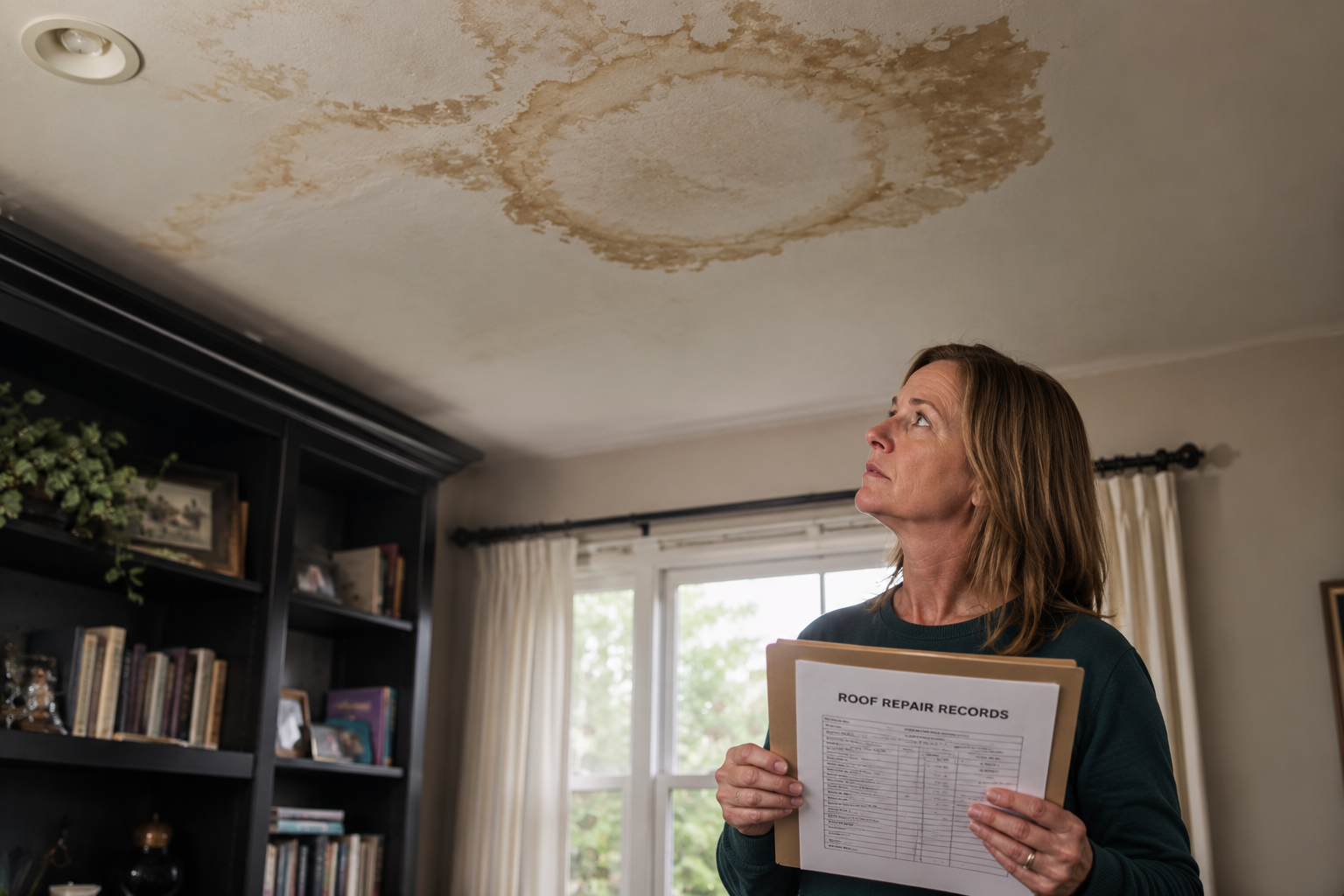
This is the king of disclosure lawsuits.
Nothing else comes close.
Water problems generate more post-closing legal battles than almost any other issue in residential real estate.
Why?
Because water leaves evidence.
And evidence tells stories.
Maybe the roof leaked during heavy storms.
Maybe a ceiling stain appeared once every few years.
Maybe water entered through a basement wall during unusually heavy rainfall.
Maybe you repaired it and genuinely believed the problem was solved.
The challenge is that buyers often discover signs of prior water intrusion after moving in.
Roofers find old patches.
Contractors find previous repairs.
Inspectors identify staining patterns.
Attics reveal evidence of long-term moisture exposure.
Once that evidence appears, buyers begin asking the same question:
"Did the seller know?"
And if records, repairs, or visible signs suggest the answer is yes, the legal battle begins.
This is why disclosure is so powerful.
If you've experienced:
Roof leaks
Basement flooding
Water stains
Drainage issues
Moisture intrusion
Previous repairs
put them on the form.
Then support them with documentation.
Inspection reports.
Repair invoices.
Warranty information.
Contractor records.
The goal is not to present a perfect house.
The goal is to present an honest one.
The Real Truth About Disclosures
Most sellers think disclosures are about protecting buyers.
They are.
But they are also one of the most powerful tools available to protect sellers.
Every documented repair.
Every disclosed issue.
Every receipt.
Every inspection report.
Every warranty.
All of it creates a paper trail that proves you acted honestly.
And honesty is your strongest defense.
The seller who hides problems creates risk.
The seller who documents problems creates protection.
That is why experienced attorneys consistently recommend the same strategy:
When in doubt, disclose.
Final Thought
The goal of disclosures is not perfection.
The goal is transparency.
Homes have histories.
Roofs leak.
Basements flood.
Foundations settle.
Neighbors argue.
Contractors forget permits.
None of those things automatically create lawsuits.
What creates lawsuits is when buyers discover those issues after closing and believe information was intentionally withheld.
Disclose the issue.
Document the fix.
Keep the records.
Protect yourself.
Because spending a few extra minutes completing a disclosure form correctly is a lot easier than spending the next year explaining your decisions to a judge.
The Agent Lie That Creates Many of These Problems
Many disclosure mistakes start because sellers receive bad advice long before they ever fill out the paperwork.
The most expensive version?
When someone tells you that keeping information quiet helps your chances of selling.
It doesn't.
It increases your chances of getting sued.
That's why I created another video breaking down the most common real estate agent myths that cost sellers money and create unnecessary risk.
Understanding disclosures is one way to protect your equity.
Understanding how the industry works is the next step.


