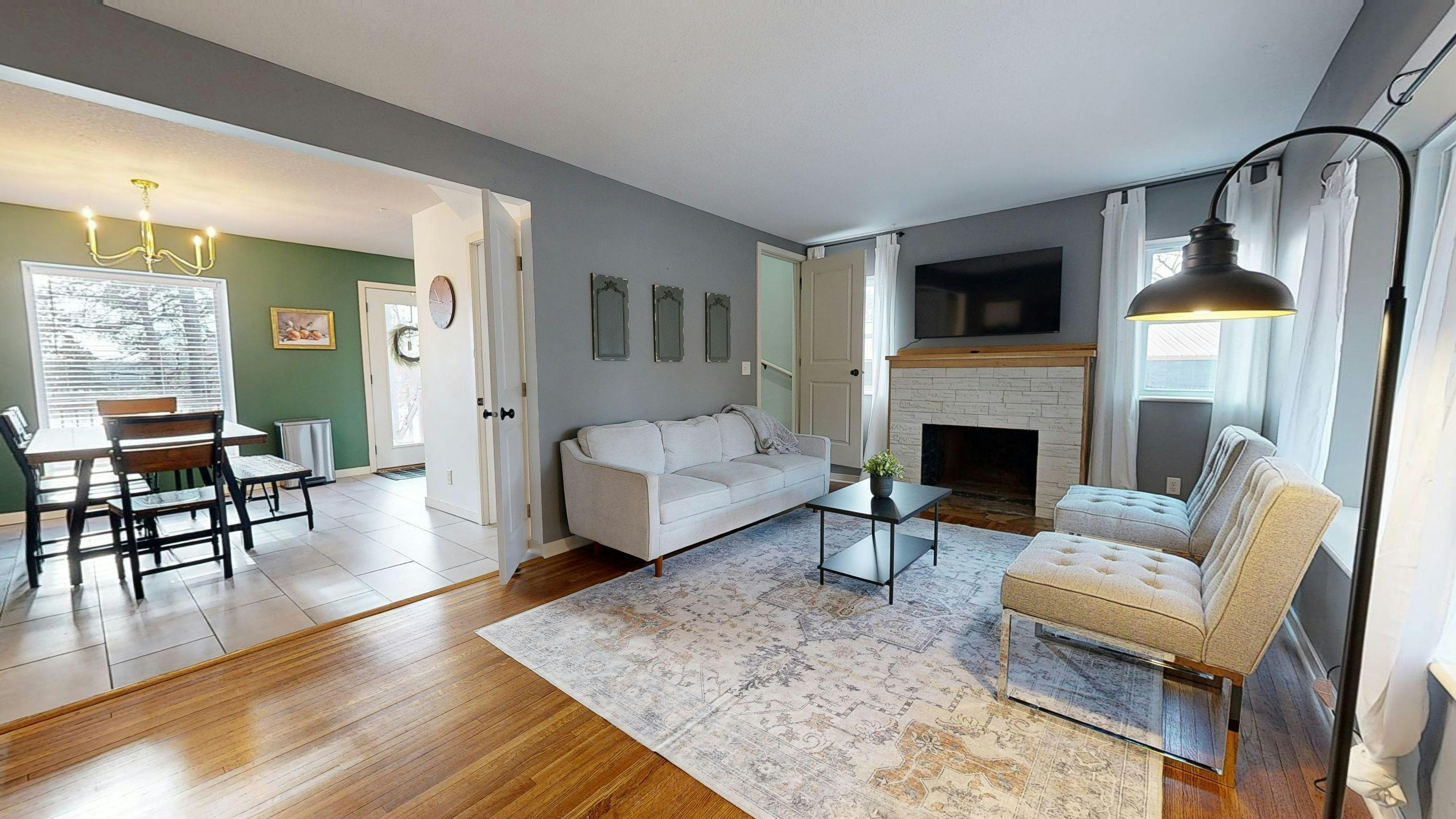
Forgettable or Unforgettable? The One Room That Seals the Deal
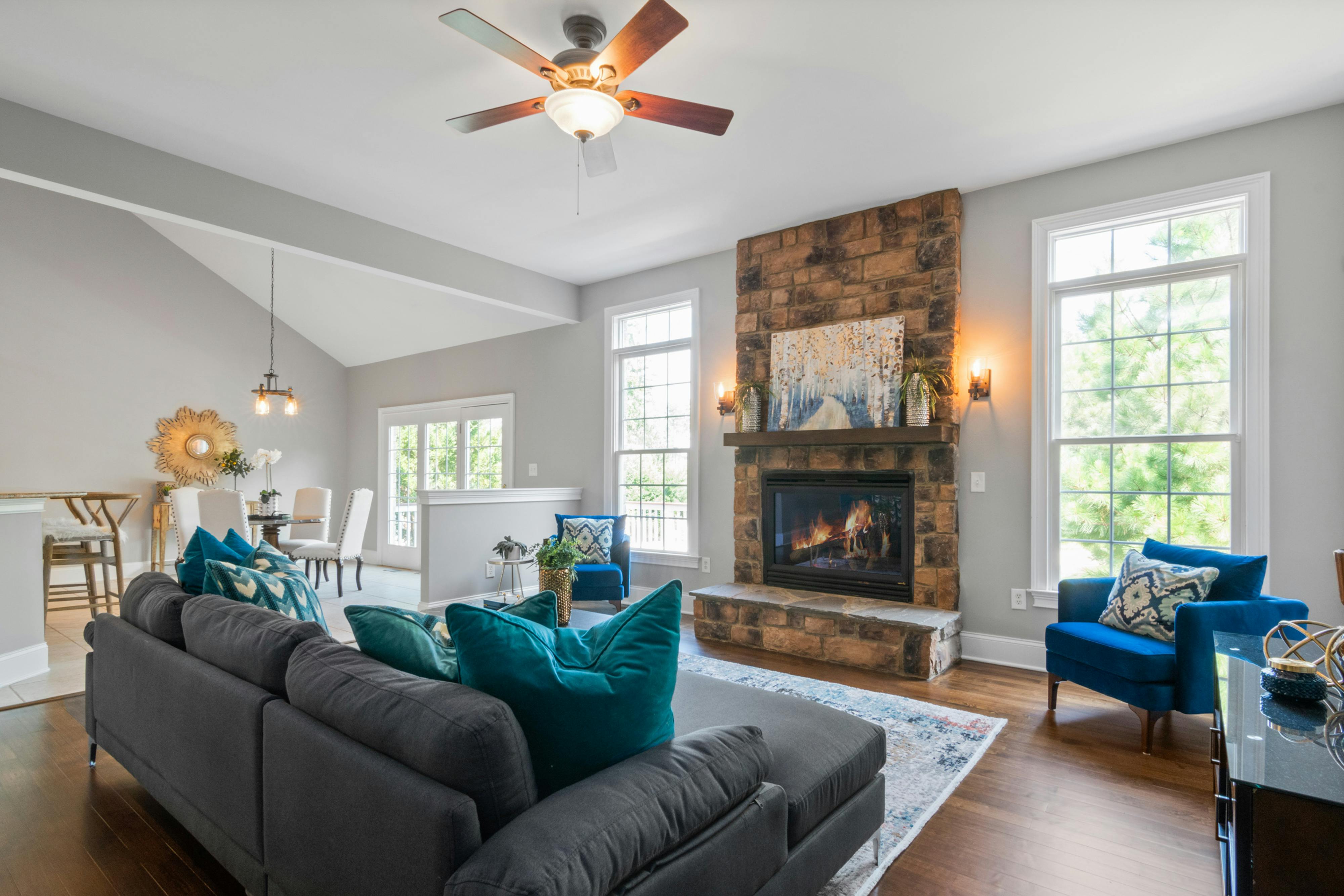
Most buyers do not remember “nice.”
That is one of the most expensive truths in real estate.
They do not remember the safe house. They do not remember the neutral house. They do not remember the one with the respectable gray walls, the very sensible couch, the perfectly acceptable throw pillows, and the builder-grade lighting that looked fine in the photos and generated absolutely no feeling in a human brain.
What they remember is the house with a pulse.
They remember the bright yellow front door on a street full of beige. They remember the vintage mirror in the entryway. They remember the one room that felt different enough to stop them mid-scroll or mid-showing and make them think, “Wait a second… this one has something.”
That “something” is what matters.
Because buyers do not go see one house and then buy it in some perfect, linear, emotion-free process. Most of them look at a bunch of homes. They scroll through listing after listing. They tour house after house. And the longer that process goes on, the more everything starts to blend together into one giant neutral soup of gray walls, white trim, and forgettable furniture.
That is the danger.
Your house may not be sitting because it lacks value. It may not be sitting because the layout is wrong. It may not even be sitting because the price is wildly off.
It may be sitting because it is forgettable.
And forgettable homes do not earn second showings. They do not create excitement. They do not get talked about over dinner that night. They do not become “the one with the cool living room” or “the one with that awesome entry light” or “the one I cannot stop thinking about.”
They just blur into the pack.
That is what this post is about fixing.
Today, I want to show you why one memorable room can do more for your sale than a whole house of “safe” staging, how to pull it off cheaply, how to make buyers bookmark your listing in their brains, and how to do it without turning your home into some weird performance art project that makes people wonder if you are okay.
Because yes, there is a right kind of weird.
And if you use it well, it can absolutely help sell your house.
Why Buyers Forget “Nice” but Remember “Different”
Let’s start with what most people get wrong about staging.
They think staging is supposed to make the house look polished.
That is part of it, sure. Clean, decluttered, bright, and photographed well — all of that matters. But if the end result is just another perfectly respectable house that looks identical to 43 other listings in your zip code, then you have a problem.
You followed the template so perfectly that you became a template.
That is not a win.
A lot of sellers go online, search for staging inspiration, and recreate the same exact formula:
neutral couch
trendy throw pillows
brass floor lamp
generic art
little bowl of decorative nonsense
beige, gray, oatmeal, and surrender
And yes, it looks “nice.”
But nice does not create a memory.
This is where buyer psychology matters more than people realize. Buyers are not only evaluating square footage and bathroom count. They are also sorting homes emotionally. They are unconsciously ranking which homes left an impression and which ones dissolved into background noise.
And the homes that stick are usually the ones with one visual bookmark.
Not chaos. Not clutter. Not ten weird things competing for attention. Just one strong, well-placed point of interest that makes the house easy to recall.
This is especially important if your home is on the market and not moving.
Because sometimes the issue is not that buyers dislike it.
The issue is that they cannot remember it.
The Real Goal of Staging Is Not Perfection — It Is Recall
Most people treat staging like a cleanliness competition.
Make every surface disappear. Remove all signs of life. Neutralize every corner. Sand away every rough edge of personality until the house feels like a showroom built by risk-averse accountants.
And while cleanliness absolutely matters, total sterilization can backfire.
A house can be so tidy, so neutral, and so design-safe that it generates zero emotional attachment whatsoever.
That is the problem with “perfect.”
Perfect is often forgettable.
The real goal of staging is not to impress someone for five seconds while they stand in the room. The goal is to make the house easy to remember later, when the buyer is comparing options and trying to decide which homes deserve a second look.
That means you need contrast.
You need one thing that catches attention without hijacking the whole room.
You need one detail that gives the house a nickname in the buyer’s mind.
Because buyers do not say, “I liked the house with the tasteful cream sofa.”
They say, “I liked the house with that cool ladder blanket thing,” or “the one with the dramatic green wall,” or “the one with that incredible entry fixture.”
That is what sticks.
That is what gets discussed.
And that is what earns second showings.
The Biggest Staging Mistake Sellers Make: Spending Money to Blend In
This is one of the dumbest ways to spend a few hundred bucks before listing.
You buy all the trendy staging pieces everybody else bought two years ago. You recreate the influencer-approved look. You think you are making the house feel current. What you are actually doing is making it visually interchangeable with everything else in the market.
You spent money to become more invisible.
That is a terrible trade.
A lot of sellers do not realize how dangerous that is because the room still “looks good.” But good is not enough if it does not create any spark.
That is why I always say buyers do not remember beige.
They will remember one bold wall. One interesting light fixture. One vintage anchor piece. One sculptural element on the wall. One carefully designed little moment that interrupts the sameness.
The moment you understand that, staging gets much easier.
Because you stop trying to furnish an entire fantasy and start trying to create one memorable highlight.
That is far cheaper, far smarter, and far more effective.
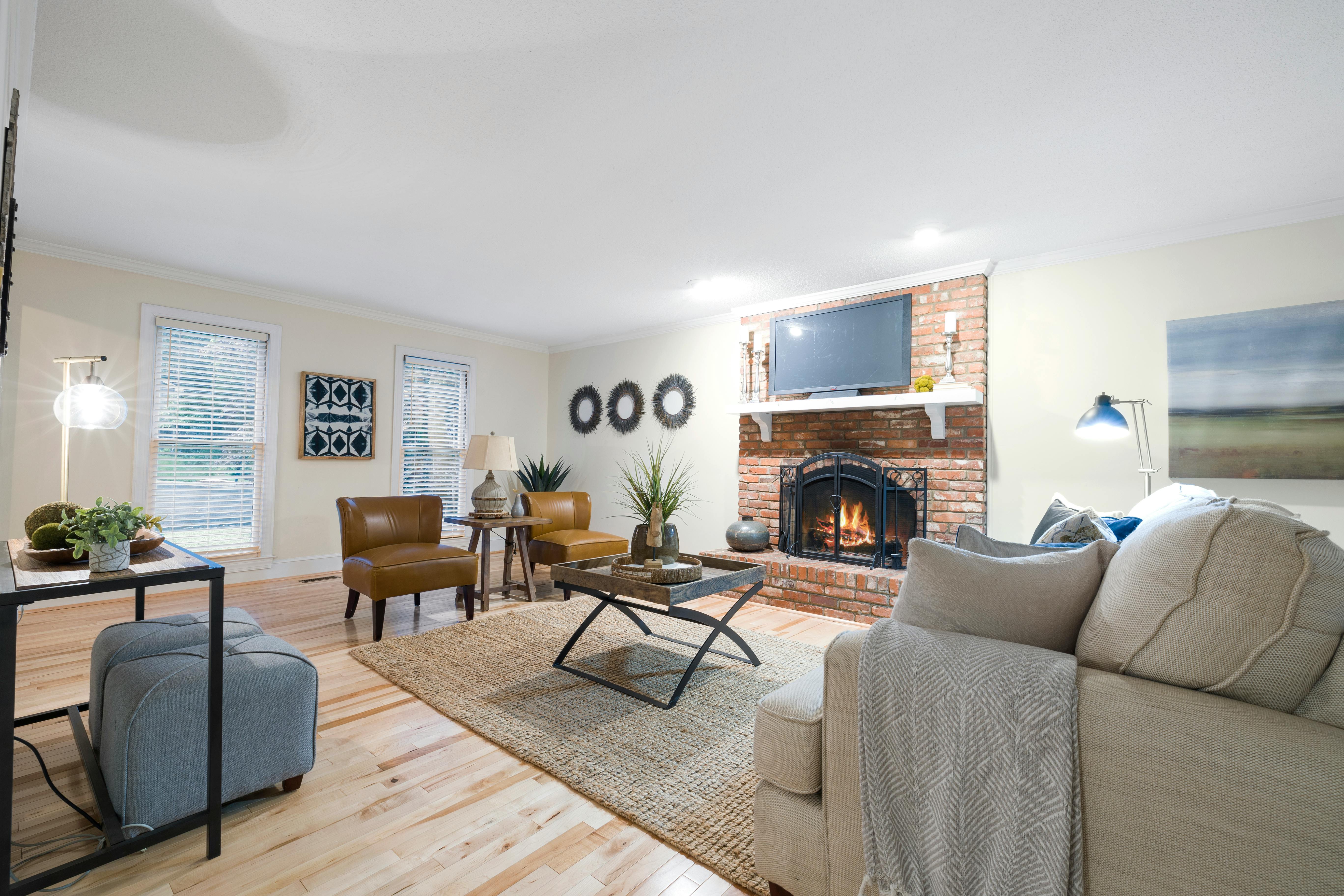
Start with One Unique Vintage Piece
If you do nothing else, do this.
Put one unique piece in the room.
Not ten.
Not a whole antique store. Not enough vintage clutter to make the house smell like a church basement and regret. Just one genuinely interesting piece that breaks the pattern.
A vintage wooden ladder in the corner with a chunky knit blanket. An old mirror with character. A weathered stool. A cool antique frame. An old window frame repurposed decoratively. Something with texture, age, and visual presence.
Why does this work?
Because contrast creates memory.
If everything in a room is new, matching, and mass-produced, nothing stands out. The moment you add one object with history or shape or patina, the room becomes easier to remember. That piece becomes the visual hook.
And the beauty of this strategy is that it does not have to cost real money.
You can find pieces like this at:
estate sales
thrift stores
flea markets
garage sales
relatives’ garages
the corner of your aunt’s life she has been trying to get rid of since 2009
People are often thrilled to offload old stuff they think nobody wants. Meanwhile, you are borrowing or buying visual personality for next to nothing.
That is how you get memorable without getting expensive.
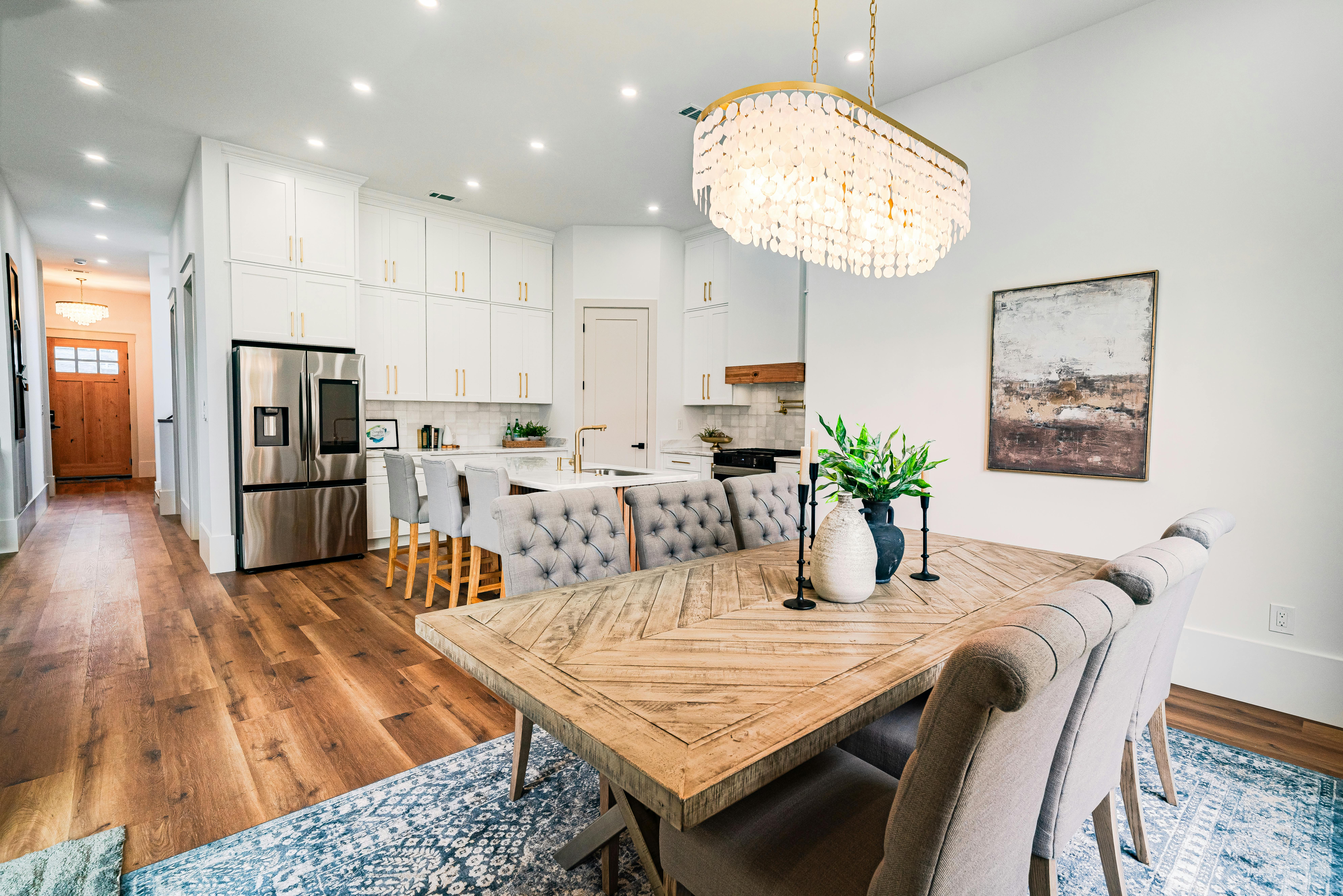
Swap One Light Fixture and Change the Entire Vibe
If builder-grade lighting has a signature emotional effect, it is “this place feels like a dentist office.”
Lighting matters so much more than sellers think.
And the good news is that you do not need to replace every fixture in the house to change the feel. Usually, one well-chosen fixture in the right room can do the job.
The dining room pendant. The entry chandelier. The fixture over a breakfast nook. The light in the standout room. Those are all opportunities.
You want something with personality. Not nonsense. Personality.
A brass geometric pendant. A vintage chandelier with presence. An industrial fixture with clean lines. Something that makes a buyer look up and think, “Oh, that is cool.”
And here is what makes this so powerful for resale: unlike a borrowed decor piece, the light fixture stays with the house. It becomes part of what made the room feel special.
That matters.
Buyers will not say, “I loved that 3000K lumen output consistency.” They will say, “That house had such a cool dining room light.”
That is what you want.
Put Something Three-Dimensional on the Wall
This one sounds slightly insane until you see it done well.
Most people hang flat rectangle art because that is what everybody does. Canvas. Print. Framed quote. Generic abstraction that looks like it came free with a condo lease.
Fine.
But if you want a room to stick, try putting something truly dimensional on the wall instead.
Decorative plates. Vintage tennis rackets. An old window frame. A quilt. A sculptural piece. Something that comes off the wall and creates shape and texture instead of just taking up blank space like polite wallpaper.
Why does this work?
Because restaurants figured this out a long time ago. Memorable spaces often use memorable walls. The human eye responds to layered, unusual, slightly surprising surfaces. That is why interesting restaurants hang old signs, bicycles, objects, textures, and collected pieces instead of leaving every wall dead flat.
You can steal that principle for free.
The trick is not to go overboard. One strong dimensional wall moment is interesting. Fifteen pieces of “quirky” junk turns your listing into an intervention.
Remember the rule: curated quirk is magnetic. Messy chaos is a red flag.
Use Unexpected Arrangement to Create a Visual Magnet
There is another low-cost tactic that works beautifully if you have taste and terribly if you do not.
Arrange one thing in a slightly unexpected way.
Stack books vertically instead of horizontally. Group three different-sized vases so they feel sculptural. Use one object in a way that feels intentional rather than standard.
The point is not randomness.
The point is to make the buyer pause for half a second and think, “Huh. I would not have done that, but it works.”
That little pause is powerful. It creates what I call a visual tractor beam. The eye gets pulled in. The room stops feeling generic. The buyer spends a few extra seconds in the space. That extra attention often becomes extra memory.
And memory is the game.
If you are not sure whether you created “interesting” or “concerning,” take a photo and send it to one brutally honest person. Ask them one question:
“Does this look cool or does it look like I’m unraveling?”
You need that friend.
MID-ARTICLE CONTENT UPGRADE CTA
Want My FSBO Negotiation Scripts That Earn an Extra 10%?
Get the FSBO Negotiation Power Pack — the exact scripts sellers use when agents or buyers try to crack their confidence.
Learn what to say, when to stay silent, and how to control the deal.
Download here: https://foolprooffsbo.com/checklist
Break the Rule Exactly Once Per Room: The Intentional Vignette
You have probably heard the standard staging advice:
Clear every surface.
And yes, mostly do that.
But there is one place where I want you to break that rule — exactly once per room.
Leave one beautiful little moment.
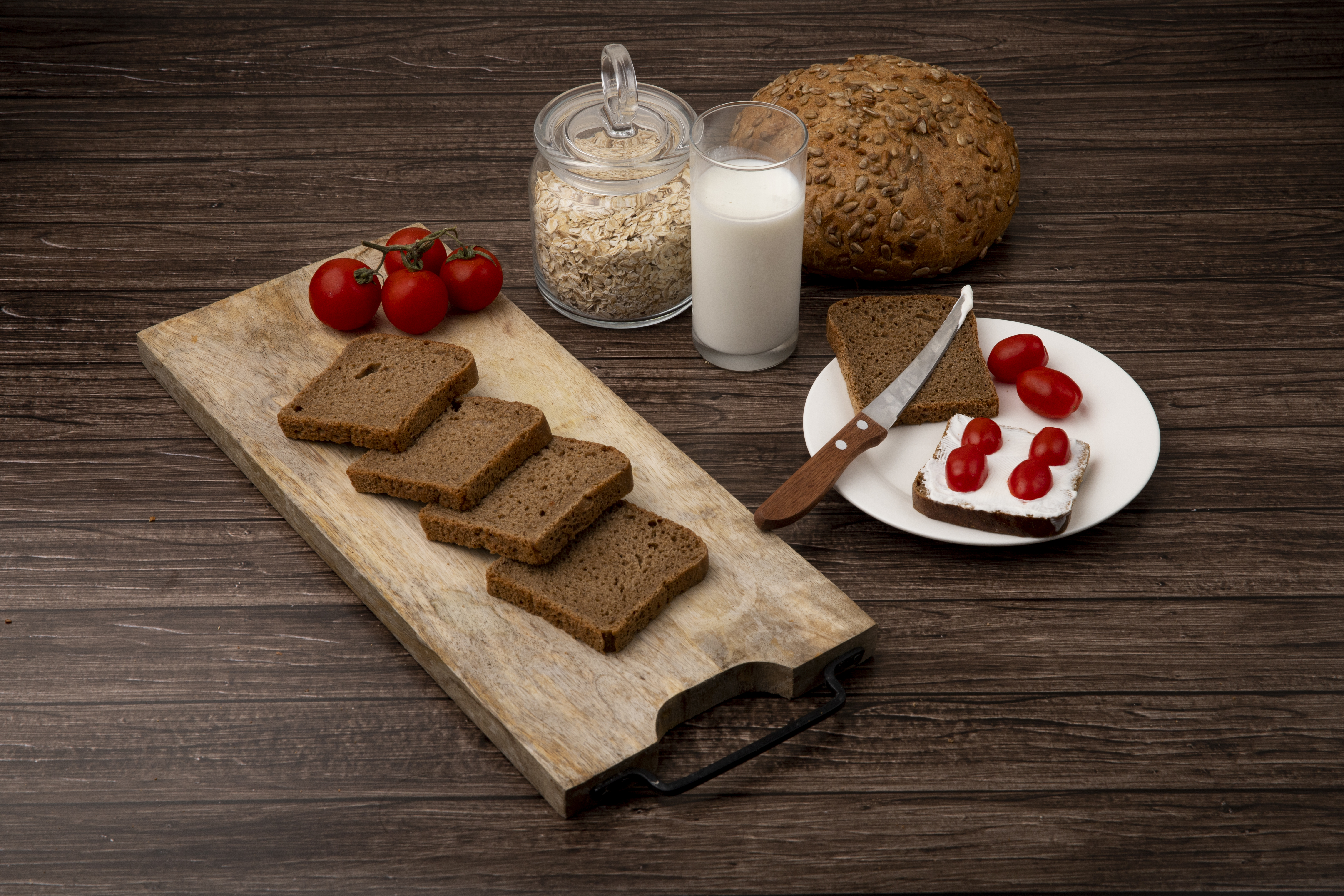
A cutting board with a loaf of bread in the kitchen. A stack of books with reading glasses on a nightstand. A tiny coffee setup with a mug and a plant. A carefully placed tray with one candle and one object in the living room.
This is called an intentional vignette, and it works because it creates story.
Buyers do not want to feel like they are touring a furniture warehouse. They want to imagine life in the house. One tiny scene per room helps them do that. It says, “A happy person lives here, and you could too.”
That is emotional staging.
But here is the critical part: one per room.
Not three.
Not every surface.
Not enough decorative trays to suggest you are hiding from your feelings through candle arrangements.
One.
Zero is sterile. Ten is chaos. One is perfect.
If You Only Have Time for One Room, Make One Room Unforgettable
Here is the shortcut for normal people who are moving in three weeks and barely holding it together.
Do not try to make the whole house unforgettable.
Pick one room.
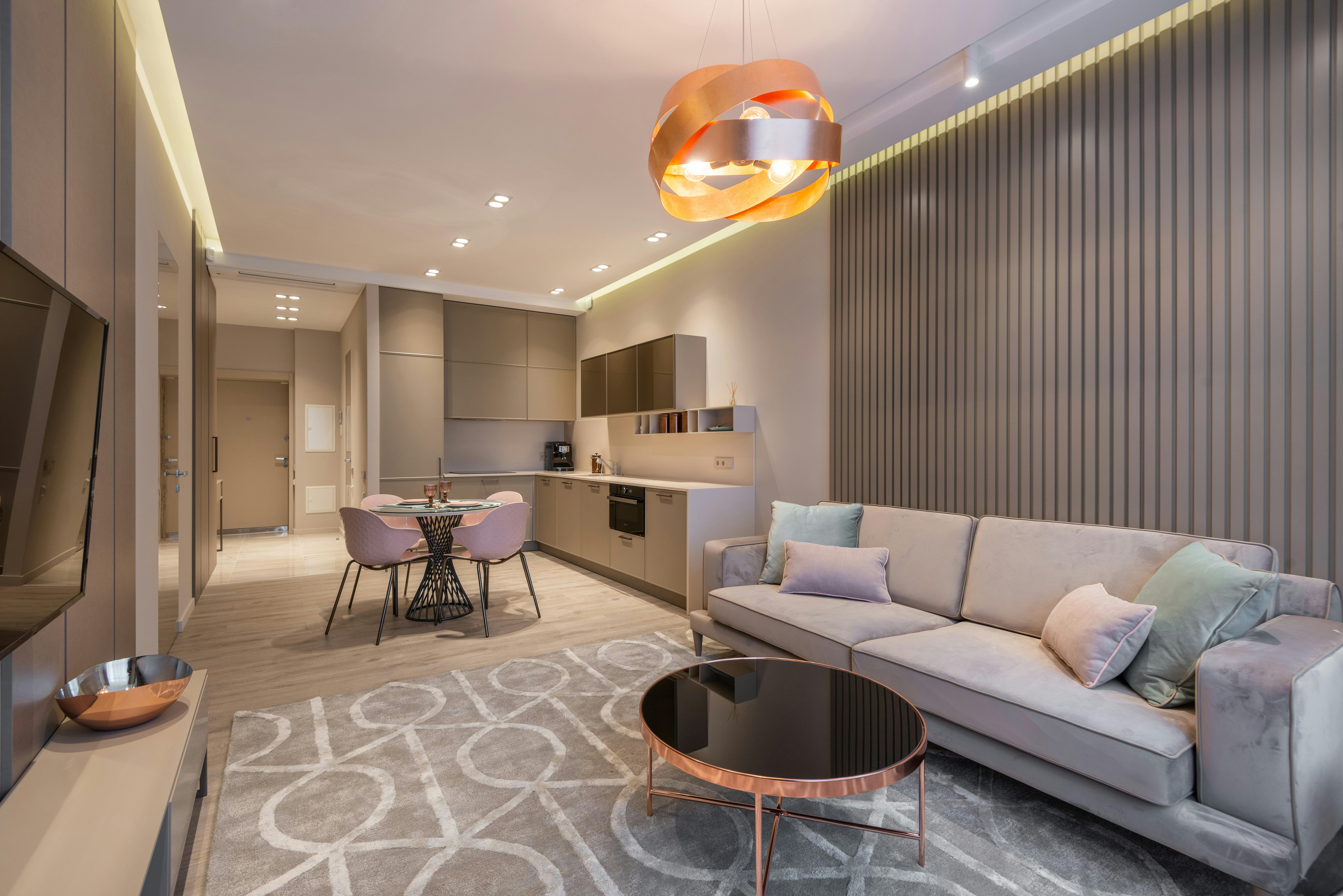
Usually that is the living room, kitchen, or sometimes the dining space — whichever photographs best and carries the strongest emotional weight in the listing.
Make that room the star.
That one room gets:
the cool light fixture
the interesting wall moment
the vintage anchor piece
the stronger lighting
the more intentional story
Everything else can stay cleaner, safer, and simpler.
This works because buyers remember highlight reels, not every scene in order. One standout room often creates a glow effect that spills onto the rest of the house in memory. They walk away remembering the home as more stylish, more interesting, and more emotionally appealing than it may have been overall.
That is not deception.
That is emphasis.
And emphasis is what good marketing does.
The Cheapest Shortcut of All: Fix the Lighting
If you genuinely have no time and almost no budget, then fake the whole effect with lighting.
Seriously.
Replace the bulbs in your standout room so they:
match in color temperature
are bright enough
feel warm and flattering
photograph well
I like the 3000K to 3500K range for most living spaces because it feels warm without going dingy. And matching bulbs matter more than people realize. Mixed temperatures make rooms feel disjointed, accidental, and weird in a bad way.
Good lighting makes rooms feel:
larger
cleaner
more expensive
more polished
more photogenic
Combine that with one interesting object and suddenly the room feels like it belongs in a magazine instead of a random listing feed.
That is an incredible return for the cost of a few bulbs and a quick trip to Home Depot.
Match the “Weird” to the Market
This is where people can get themselves in trouble.
The principle is not “make the house weird no matter what.”
The principle is “create one memorable moment in the visual language your buyers already like.”
That distinction matters a lot.
If you are selling a warm suburban home, vintage charm can work beautifully. Wooden pieces. Cozy accents. A charming mirror. Something warm and grounded.
If you are selling a sleek downtown condo, that same vintage ladder blanket thing might feel absurd. In that setting, your memorable moment should probably be cleaner and more modern:
geometric sculpture
bold abstract art
industrial fixture
sharp lines
modern contrast
Same principle. Different expression.
You are not imposing your personal taste on the market. You are creating recall in the dialect the buyer already understands.
That is the trick.
Why the One Memorable Room Seals the Deal
At the end of the day, buyers do not remember houses the way sellers think they do.
They do not retain every bedroom count, every fixture, every faucet, every measurement. They retain feelings, images, and shortcuts.
They remember:
the one with the cool mirror
the one with the yellow door
the one with the great light
the one living room that felt like a magazine
the one house that did not melt into the gray soup
That is what gets second showings.
And second showings matter because buyers do not return to homes they forgot.
That is why this one room matters so much. It becomes the emotional anchor for the whole listing. It gives the house a nickname in the buyer’s brain. It makes comparison easier. It makes recall stronger. It makes the home feel alive instead of merely available.
And once the buyers come back, you have a real shot at an offer.
The Mistake Most Sellers Make After They Finally Get Attention
Here is the funny part.
A lot of sellers work hard to get buyers interested, then completely fumble the next step because they are not prepared for what happens if multiple people want the home.
That is where the second half of the strategy matters.
You do not just want attention. You want attention you know how to manage.
That means your staging is not separate from your sale strategy. It is the front end of it. A memorable room gets the house back into the conversation. A better marketing plan turns that attention into leverage. And once buyers start circling, you need to know how to encourage the right kind of competition without getting pushed around.
That is how a standout room becomes more than decor.
It becomes momentum.
Final Thought
Safe staging is functional.
But functional is not the same thing as memorable.
And memorable is what moves homes.
So stop trying so hard to look like every other listing in the neighborhood. Stop spending money recreating the same neutral internet template that nobody remembers two hours later. Stop aiming for “nice” if nice means invisible.
Give buyers one thing to remember.
One weird-good moment.
One standout room.
One detail that becomes the house’s nickname in their minds.
That is often all it takes to move your home from “fine” to “the one we should see again.”
And once you start getting those second showings, the next step is learning how to handle the offers and create the kind of multiple-buyer momentum that gets you paid.
Get The FSBO Seller Plan here:https://foolprooffsbo.com/fsbo-survival-guide


