
Top 10 Agent Lies That Steal $31K From Home Sellers

Bad real estate advice can sound almost identical to good real estate advice.
That is what makes it so expensive.
You do not usually find out the difference while the agent is sitting at your kitchen table smiling, complimenting your backsplash, and telling you your house is “special.” You find out later, after the listing has gone stale, after the price cuts start, after you paid for repairs that did not return anything, after the deal falls apart over appraisal, or after you realize $30,000 of your equity just left your pocket because nobody challenged the assumptions.
And to be clear, great real estate agents exist.
The best ones will probably nod through this entire list because they know these problems are real. They know weak agents overpromise, under-explain, and hide behind industry habits instead of doing what actually protects the seller.
But the mediocre agents?
They are going to hate this.
Because today we are walking through the top 10 agent lies that steal $31K from home sellers, starting with the smaller ones and working toward the lie that protects the entire commission machine.
10. “Your Home Is Special”
This one feels good.
That is why it works.
A bad agent would rather comfort you with a lie than disappoint you with the truth. So they tell you your home is different. The comps do not really capture it. Their marketing will create magic. Their drone guy, Instagram followers, and “unique strategy” will somehow make buyers ignore the house down the street that is priced better.
But buyers do not shop that way.
Buyers compare.
Your home is sitting beside every similar listing in the buyer’s phone. Same bedroom count, similar square footage, same school zone, similar pool, similar updates. If your price is higher without a clear reason, you become the backup option.
Then the house sits.
Days on market climb. Buyers start wondering what is wrong. You pay carrying costs. The listing gains stigma. Eventually, you lower the price anyway, except now you are doing it from a weaker position.
The honest answer is simple: your home may have advantages, but the market still decides what those advantages are worth.

9. “You Need My Professional Stager”
Staging can work.
But a $3,000 stager is almost never the reason a home sells.
What usually moves the needle is simpler:
decluttering
bright lighting
deep cleaning
neutral presentation
professional photography
That gets most homes 90% of the way there.
When an agent pushes one specific stager too hard, ask why. Preferred vendor relationships are not automatically bad, but they can become a problem when the recommendation serves the agent’s network more than your net proceeds.
You are not paying for someone’s professional favor exchange.
You are trying to sell your home.
Spend first on clean, light, photos, and presentation. Only pay for staging if the home genuinely needs it and the math makes sense.
8. “Keep Your Home Showing-Ready 24/7”
This sounds like commitment.
It is actually weak strategy.
A wide-open showing schedule tells the market there is no urgency. It makes your home feel endlessly available, which can signal desperation.
Scarcity creates value.
That is why structured showing windows work so well. When buyers overlap in the driveway, see shoes by the door, or notice another family walking out, they feel competition.
That changes behavior.
A buyer who thinks they are alone may sleep on it. A buyer who sees three other interested parties may write an offer that afternoon.
You also do not have to live like a museum exhibit seven days a week. Compress showings into intentional windows and make the home perfect for those windows.
That protects your sanity and increases urgency.

7. “Don’t Fix Anything. Buyers Will Just Ask for Credits.”
This is one of the most expensive half-truths in real estate.
Yes, buyers may ask for credits.
But if you leave obvious cheap repairs undone, they usually ask for far more than the repair would have cost you.
A $200 plumbing fix can become an $800 credit request.
A missing outlet cover becomes “electrical concerns.”
A loose handrail becomes “safety issues.”
A dripping faucet becomes “possible plumbing problems.”
That is how buyers and buyer agents negotiate. They inflate uncertainty.
Now, not everything should be fixed. Taste-based items like old tile, dated cabinets, or cosmetic preferences may be better priced into the home. But handyman-level items and safety issues should be handled before listing.
A pre-listing inspection can help you build a punch list and decide what to repair, disclose, or price around.
Do not walk into the market hoping the buyer’s inspector is gentle.
That is not strategy. That is gambling.
6. “The Commission Is Standard”
There is no standard commission.
There never really was.
Every home sale is different. Some are easy. Some are complex. Some require heavy strategy, negotiation, legal coordination, and problem solving. Others are clean, high-demand homes in strong neighborhoods that practically sell themselves when priced correctly.
Those should not all carry the exact same price tag.
The real question is not only what percentage the agent charges. The real question is what you net at closing.
A great agent charging more may still net you more than a weak agent charging less.
But you also have the right to negotiate.
On a $500,000 home, reducing commission from 6% to 4% can put $10,000 back in your pocket. That is real money for challenging one assumption.
The commission conversation should never be treated as untouchable.

MID-ARTICLE CONTENT UPGRADE CTA
Want My FSBO Negotiation Scripts That Earn an Extra 10%?
Get the FSBO Negotiation Power Pack — the exact scripts sellers use when agents or buyers try to crack their confidence.
Learn what to say, when to stay silent, and how to control the deal.
Download here: https://foolprooffsbo.com/checklist
5. “I’ll Fight for Every Dollar Because the More You Make, the More I Make”
Technically true.
Practically misleading.
Let’s run the math.
If your sale price increases by $10,000 and your agent earns 3%, their commission changes by about $300.
That $10,000 may matter a lot to you.
To the agent, it may be dinner.
That does not mean every agent is lazy or selfish. Many great agents fight hard because they are ethical, skilled, and reputation-driven. But mathematically, the incentive is not as perfectly aligned as sellers are told.
A deal that closes pays the agent.
A deal that dies pays nothing.
So when negotiations get tough, ask yourself whose money is really being protected.
This is why you need to understand your own bottom line, your own walk-away number, and your own net proceeds.
4. “You Pay Less Because You Don’t Need to Offer a Buyer Agent Commission”
This one got more common after commission conversations became more public.
And sometimes it can make sense.
But sellers need to understand the actual buyer math.
Imagine two similar homes are listed at $250,000.
One offers a buyer agent commission.
One does not.
If the buyer has to pay their agent out of pocket on your home, that extra cash may not be financeable into the mortgage. Suddenly your home is not just $250,000. It may require thousands more in upfront cash compared with the neighbor’s home.
That can shrink your buyer pool.
The question is not whether you should always offer buyer agent compensation. The question is whether refusing it makes your home harder to buy.
Look at the deal as a whole.
Sometimes saving commission costs you more in reduced competition.
3. “I Know Exactly What Your Home Is Worth”
No one knows exactly what your home will sell for.
Not an agent. Not Zillow. Not your neighbor. Not me.
The only person who ultimately decides value is the buyer writing the check.
Everything before that is an educated estimate.
A good pricing analysis uses:
closed sales
pending activity
active competition
absorption rate
market velocity
condition adjustments
layout differences
smell, updates, finishes, and buyer perception
A weak analysis uses three comps, a circle around the middle number, and confidence.
That is not pricing strategy.
That is a guess wearing a manila folder.
If an agent cherry-picks comps to flatter you into signing, you may feel good on listing day and awful after three price reductions.
Real pricing is not about ego.
It is about positioning.
2. “Don’t Worry About the Appraisal”
The appraisal is not a formality.
The appraiser works for the bank. Their job is not to validate your dreams or your agent’s marketing. Their job is to protect the lender from over-lending on the property.
If your agent creates competition and you go under contract above the average comp range, that is great.
But now the appraisal matters even more.
A low appraisal can force you into ugly choices:
lower the price
ask the buyer to cover the gap
renegotiate
lose the deal
go back on market with stigma
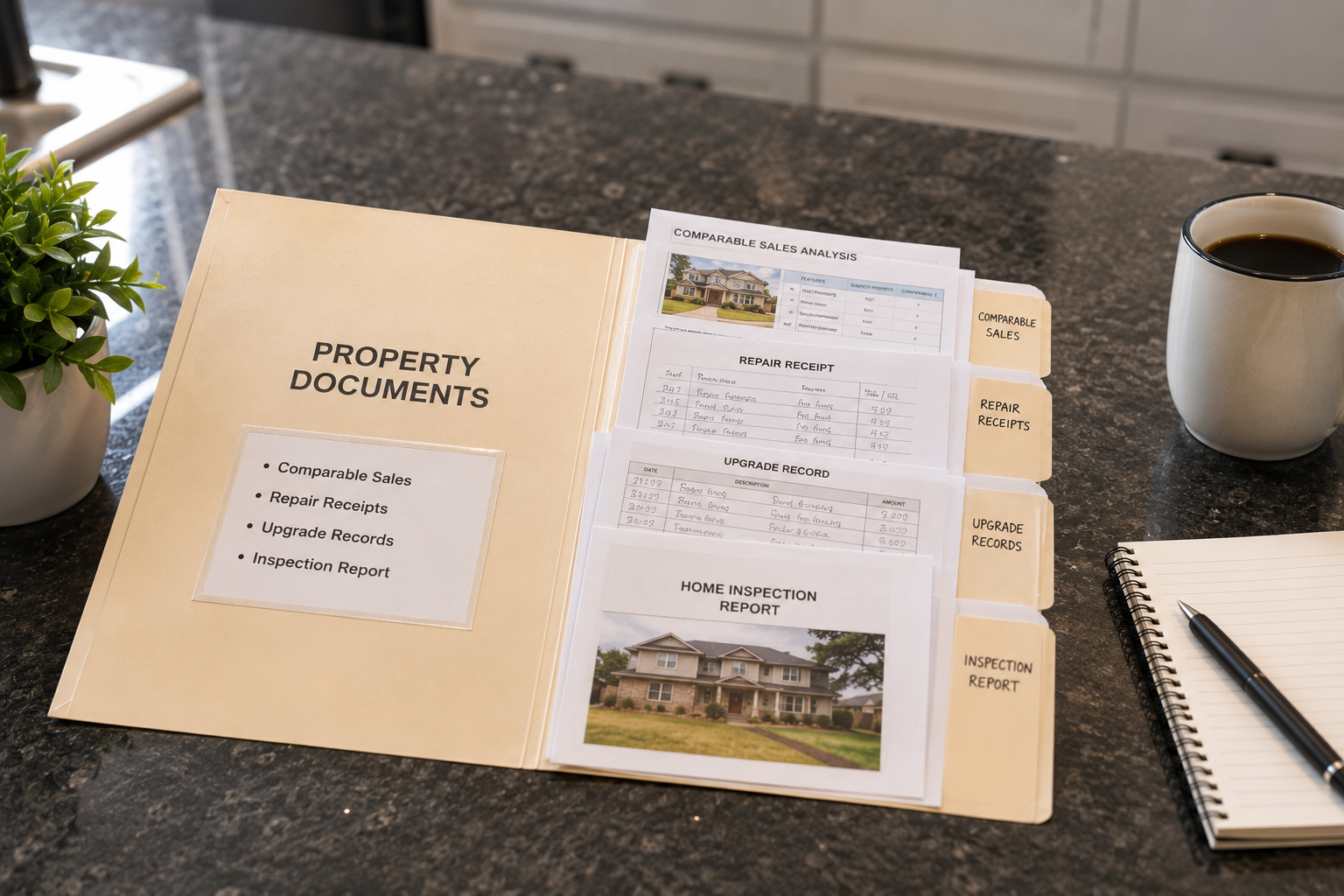
That is why you need a price defense package.
Include:
best comparable sales
upgrade receipts
improvement records
pre-listing inspection
repair documentation
relevant permits
notes on features that may not be obvious
When the appraiser arrives, do not argue. Do not lecture. Do not tell them how to do their job.
Simply hand over the package politely and get out of the way.
That one move can help defend the value you created.
1. “You Can’t Sell Your Home Yourself”
This is the big one.
The lie that protects the entire commission machine.
Selling a home is not effortless. It is not something to treat casually. But it is not magic either.
It is a process:
price correctly
prepare the home
document repairs
hire professional photography
launch strategically
manage showings
evaluate offers
use a title company or real estate attorney
close properly
You can learn that.
You can hire professionals for the parts that require them.
You can use the same photographers agents use. You can work with a title company. You can hire a real estate attorney. You can study comps. You can run a launch plan.
The industry needs you to believe you cannot.
Because the moment homeowners realize they can do this with the right system, the commission conversation changes.
You know your home better than anyone. You care about your outcome more than anyone. And with a clear process, the right paperwork support, and strong preparation, many sellers are capable of handling far more than they have been told.
The Real Lesson
The danger is not that every agent lies.
The danger is that bad advice often sounds reasonable.
“Your home is special.”
“Keep it available all week.”
“Don’t fix anything.”
“Commission is standard.”
“Don’t worry about the appraisal.”
“You can’t do this yourself.”
Each one sounds simple.
Each one can cost you money.
The solution is not to distrust everyone. The solution is to understand the math, ask better questions, and stop outsourcing your judgment to whoever sounds most confident at the kitchen table.
Your equity is too valuable for that.
Final Thought
A great agent can absolutely be worth the money.
But a bad agent can quietly cost you more than their commission ever showed on paper.
The difference is whether the advice protects your net proceeds or protects their convenience.
Before you sign anything, ask:
Is this based on data or flattery?
Does this help my net or just make the sale easier?
Is this truly necessary or just familiar industry habit?
What happens if this advice is wrong?
Who pays for the mistake?
Usually, the answer is you.
So challenge the assumptions. Run the numbers. Protect your equity.
And never forget that the money being negotiated is yours.
The Pricing Lie We Barely Scratched
There is one lie on this list that deserves its own deep dive: the CMA.
Because when someone hands you a one-page report with three comps, there may be a lot more going on than most sellers realize.


